


Politics in France: The Impact of French Revolution and the Louisiana Purchase
- Enchante' Malakie

- Apr 3, 2018
- 3 min read
France swims in a sea of African culture. Such a culture can be seen by diving into the historical structures of well thought out human architecture. The integration of language, separation of bodies, styles and beliefs. All of this at some point in history led to the colonization in Africa and enslavement. France would later abolish slavery and consider the act illegal. France took black bodies from multiple colonies and made them soldiers of war. After the war was won those black soldiers were sent back to their original colonies. France could have possibly been defeated in the war had it not been for the hands of the black bodies that stood on the front line.
The Slave Who Defeated Napoleon
Napoleon was one of the greatest generals who ever lived. But at the end of the 18th century a self-educated slave with no military training drove Napoleon out of Haiti and led his country to independence.
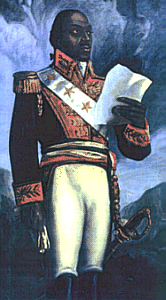
Toussaint L'Ouverture

The remarkable leader of this slave revolt was Toussaint Breda (later called Toussaint L'Ouverture, and sometimes the “black Napoleon”). Slave revolts from this time normally ended in executions and failure – this story is the exception. It began in 1791 in the French colony of Saint Dominique (later Haiti). Though born a slave in Saint Dominique, Toussaint learned of Africa from his father, who had been born a free man there. He learned that he was more than a slave, that he was a man with brains and dignity. He was fortunate in having a liberal master who had him trained as a house servant and allowed him to learn to read and write. Toussaint took full advantage of this, reading every book he could get his hands on. He particularly admired the writings of the French Enlightenment philosophers, who spoke of individual rights and equality.
In 1789 the French Revolution rocked France: The sugar plantations of Saint Dominique, though far away, would never be the same. Spurred on by such Enlightenment thinkers as Jean-Jacques Rousseau, the early moderate revolutionaries considered seriously the question of slavery. Those moderate revolutionaries were not willing to end slavery but they did apply the "Rights of Man" to all Frenchmen, including free blacks and mulattoes (those of mixed race). Plantation owners in the colonies were furious and fought the measure. Finally the revolutionaries gave in and retracted the measure in 1791. The news of this betrayal triggered mass slave revolts in Saint Dominique, and Toussaint became the leader of the slave rebellion. He became known as Toussaint L'Ouverture (the one who finds an opening) and brilliantly led his rag-tag slave army. He successfully fought the French (who helped by succumbing to yellow fever in large numbers) as well as invading Spanish and British.
Napoléon Bonaparte

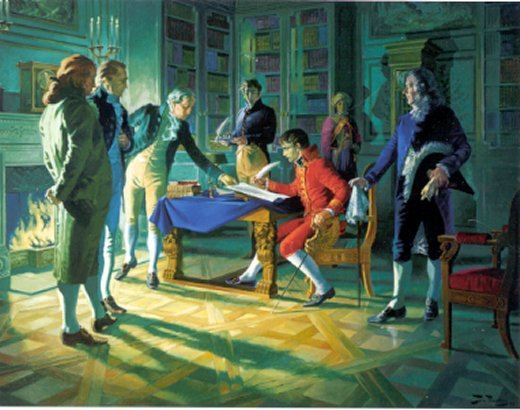
By 1803 Napoleon was ready to get Haiti off his back: He and Toussaint agreed to terms of peace. Napoleon agreed to recognize Haitian independence and Toussaint agreed to retire from public life. A few months later, the French invited Toussaint to come to a negotiating meeting will full safe conduct. When he arrived, the French (at Napoleon's orders) betrayed the safe conduct and arrested him, putting him on a ship headed for France. Napoleon ordered that Toussaint be placed in a prison dungeon in the mountains, and murdered by means of cold, starvation, and neglect. Toussaint died in prison, but others carried on the fight for freedom. Six months later, Napoleon decided to give up his possessions in the New World. He was busy in Europe and these far-away possessions were more trouble than they were worth. He abandoned Haiti to independence and sold the French territory in North America to the United States (the Louisiana purchase).
Source: http://www.historywiz.com/toussaint.htm
The Louisiana Purchase (Gone in 60 seconds)
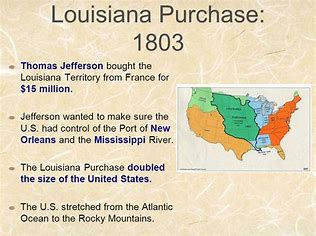
Why was "The Louisiana Purchase" so important to the United States?





The Purchase Order

"The slave of slavery is the one who doesn't want to know"






Comments